Woodworm Treatment and control in Ireland
Woodworm can affect roof timbers, floorboards, joists, furniture and other structural timber within a property. Signs can include small holes in the timber, fine dust or frass, weakened wood, or evidence of beetle activity.
At Timbercare Woodworm LTD, we provide professional woodworm inspection and treatment for homes and properties across Meath, Cavan, Westmeath, Louth, Monaghan, Longford, Kildare and Dublin.
With over 45 years of timber and carpentry experience, we understand how to assess affected timber, establish the extent of the problem and recommend the appropriate treatment — whether it is a small localised infestation or more extensive woodworm activity.
Not sure if you have active woodworm? Contact us for a free quotation.


Is Woodworm Damage Always Serious?
Quite often, woodworm damage has already occurred by the time an infestation is identified. This is largely due to the life cycle and behaviour of wood-boring beetles.
In many cases, the Common Furniture Beetle (Anobium punctatum) is responsible. Adult beetles typically emerge from timber between April and September, leaving behind the characteristic small exit holes that are often the first visible sign of woodworm.
However, these holes can represent the final stage of a much longer process. The beetle may remain within the timber in its larval stage for several years, feeding and tunnelling through the wood before emerging as an adult.
Importantly, the presence of woodworm holes does not automatically mean that the infestation is active or that the timber has been structurally compromised.
A professional inspection can help establish the extent of the damage, identify signs of active infestation and determine whether treatment is required. Where necessary, Timbercare can recommend targeted treatment to address the affected areas and help protect the timber from further deterioration.
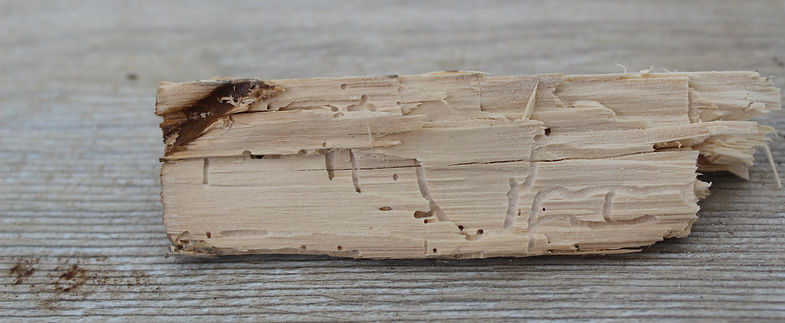
Section through timber showing woodworm exit holes and larvae tunnels in Co Meath
Signs of Active Woodworm
Finding holes in timber does not always mean that woodworm is currently active. Some holes may have been present for many years, which is why the timber should be properly assessed before deciding whether treatment is necessary.
Signs that may indicate current or recent woodworm activity include:
• Fresh exit holes appearing in timber
• Fine dust or frass around or beneath affected wood
• Live or dead beetles near the affected area, particularly during the warmer months
• Weak or crumbling timber where infestation has been extensive
• New holes appearing in previously monitored timber
Woodworm is commonly discovered in roof and attic timbers, floorboards, joists and other structural timber.
If you have found holes or signs of possible woodworm and are unsure whether the infestation is active, Timbercare can inspect the affected area and advise whether treatment is required.
The Right Woodworm Treatment for Your Property
No two woodworm problems are exactly the same. At Timbercare Woodworm LTD, we assess each property individually to establish the extent of the problem and determine the most appropriate course of action.
Our approach is based on accurate diagnosis rather than simply treating visible woodworm holes. We assess the affected timber, look for evidence of active infestation and consider any underlying conditions that may be contributing to the problem.
Depending on what we find, treatment may involve a small localised area or more extensive timber treatment. We will explain what we recommend and why before any treatment work is carried out.
Where damaged timber needs to be repaired or replaced, the work can be carried out by our experienced trades carpenter, giving you a complete service from inspection and treatment through to timber repair or replacement.
Local Woodworm Treatment Across Cavan, Meath & Surrounding Counties
Our local team operates from Mullagh, Co. Cavan, Navan, Co. Meath and Mullingar, Co. Westmeath, providing woodworm inspection and treatment throughout Cavan, Meath, Westmeath, Louth, Longford, Kildare, Monaghan and Dublin.
From a small woodworm problem in an attic or floor to a more extensive infestation, no job is considered too small to contact us about.
Qualifying remedial treatments are backed by our 20-year guarantee